Search Engine Optimisation: A Practical Guide for Businesses
Search engine optimisation (SEO) is the process of improving a website so that it is easier to find in search engines such as Google and Bing. A well-optimised website can attract more relevant visitors, answer their questions and support business growth over time.
SEO is not a quick fix or a guarantee of reaching the top of search results. It involves ongoing work across a website’s content, technical set-up and reputation. Search engines also update how they rank pages, so effective optimisation means focusing on useful, reliable experiences for visitors.
Why SEO matters
People often use search engines to research a topic, compare services or find a local business. Appearing prominently for relevant searches can help a company reach potential customers at the moment they are looking for information or solutions.
Unlike paid advertising, organic search traffic does not require a fee for every click. However, SEO still takes time and resources. Results depend on factors such as competition, the condition of the website and the quality of its content.
Key areas of SEO
Understand your audience and keywords
Keyword research helps identify the words and phrases people use when searching. The aim is not simply to target the most popular terms, but to understand the needs behind them. Someone searching for “how to choose a boiler” may want advice, while someone searching for “boiler installation near me” may be ready to contact a provider.
Choose relevant topics and phrases for your audience, then use them naturally in page titles, headings and copy. Avoid forcing keywords into text where they do not fit.
Create useful, trustworthy content
Good content gives readers clear, accurate information and helps them take the next step. This could include service pages, practical guides, product descriptions or answers to common questions.
Make each page focused on a clear purpose. Use straightforward language, organise information with descriptive headings and keep important details up to date. Content should be written for people first, rather than created solely to influence rankings.
Improve on-page elements
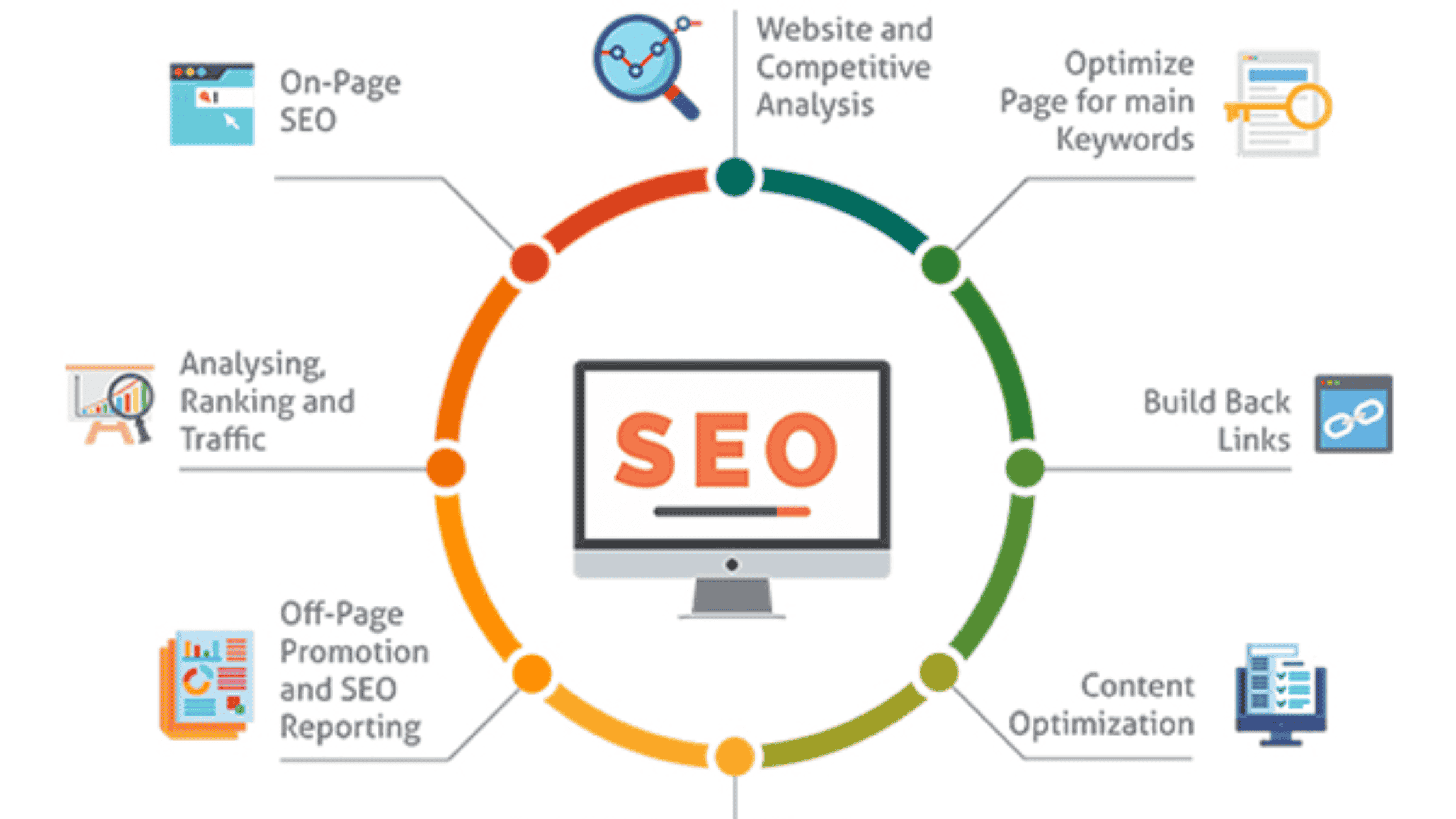
On-page SEO covers the content and elements that appear on individual pages. Important details include:
- Page titles: Write a concise, distinctive title that describes the page.
- Headings: Use a clear heading structure to make the content easier to scan.
- Meta descriptions: Summarise the page accurately to encourage relevant searchers to visit.
- Internal links: Connect related pages so visitors and search engines can find useful information.
- Images: Use suitable file sizes and descriptive alternative text where it helps explain an image.
Get the technical foundations right
Technical SEO helps search engines access, understand and index a website. Check that important pages can be crawled, that the site uses HTTPS and that there are no unnecessary broken links or duplicate pages.
Site speed and mobile usability also matter. Pages should load reliably and be easy to use on different screen sizes. A simple, logical site structure can help visitors find what they need without confusion.
Build authority responsibly
Links from other reputable websites can help search engines understand that your content is worth referencing. The most sustainable way to earn links is to publish genuinely useful material, develop relationships in your sector and make your expertise easy to discover.
Avoid buying links or using schemes designed to manipulate rankings. Such tactics can damage a website’s visibility and reputation.
Local search optimisation
For businesses serving a particular area, local SEO can make it easier for nearby customers to find them. Keep your business name, address and telephone number consistent across relevant directories. Maintain an accurate business profile on platforms such as Google Business Profile, add clear details about your services and invite genuine customer reviews.
Measure and improve
SEO should be guided by evidence. Tools such as Google Search Console and web analytics platforms can help you understand which searches bring visitors to your site, which pages perform well and where technical issues may exist.
Look beyond rankings alone. Consider whether organic visitors are engaging with your content, making enquiries or completing other useful actions. Review performance regularly, make considered changes and allow enough time to assess their effect.
SEO is a long-term process
Search engine optimisation works best as an ongoing part of a broader digital strategy. By understanding your audience, publishing helpful content, maintaining a technically sound website and measuring meaningful results, you can build a stronger presence in organic search over time.
9 Key Benefits of Search Engine Optimisation
- Increases online visibility
- Attracts relevant visitors
- Builds brand credibility
- Supports long-term growth
- Improves website usability
- Can generate quality leads
- Helps reach local customers
- Provides measurable insights
- Reduces reliance on paid ads
Five Disadvantages of Search Engine Optimisation
- SEO can take months to show results.
- Search engine algorithms change frequently.
- Competitive keywords can be difficult to rank for.
- Effective SEO requires ongoing time and investment.
- Rankings and traffic cannot be guaranteed.
Increases online visibility
Increases online visibility
Search engine optimisation can help your website appear more prominently when people search for products, services or information related to your business. By improving your content, site structure and technical performance, you make it easier for search engines to understand and show your pages to relevant audiences. Greater visibility can bring more potential customers to your website and help your business stand out online.
Attracts relevant visitors
Attracts relevant visitors
Search engine optimisation helps your website appear for searches related to your products, services or expertise. By creating useful content around the questions your audience is asking, you can attract visitors who are more likely to be interested in what you offer. This can lead to more meaningful engagement, enquiries and sales than visits from people who are not looking for your services.
Builds brand credibility
Strong search engine optimisation can help build brand credibility by making your business easier to find when people are looking for reliable information, products or services. Helpful content, a professional website and prominent visibility in relevant search results can create a positive first impression and reinforce trust. Over time, consistently answering customers’ questions can position your brand as a knowledgeable and dependable choice.
Supports long-term growth
Search engine optimisation supports long-term growth by helping a website attract relevant visitors consistently over time. Unlike paid advertising, which typically stops generating traffic when spending ends, strong SEO can continue to deliver value through useful content, improved visibility and a better website experience. Regular optimisation helps businesses build a sustainable online presence and reach potential customers as their needs evolve.
Improves website usability
Search engine optimisation can improve website usability by making pages faster, easier to navigate and more accessible across different devices. Clear headings, logical menus and helpful internal links guide visitors to the information they need, while well-structured content is easier to read and understand. These improvements create a better experience for users and can also help search engines interpret and index a website’s pages.
Can generate quality leads
Search engine optimisation can generate quality leads by helping your business appear when people are actively searching for relevant products or services. By targeting useful search terms and providing clear, informative content, you can attract visitors who are more likely to need what you offer. This means your website can bring in prospects with genuine interest, making it easier to turn relevant traffic into enquiries and customers.
Helps reach local customers
Search engine optimisation can help local customers find your business when they search online for nearby products or services. By using relevant location details on your website, keeping your business information accurate and maintaining a complete Google Business Profile, you can improve your visibility in local search results and make it easier for people in your area to contact or visit you.
Provides measurable insights
One of the key advantages of search engine optimisation is that it provides measurable insights into how people find and use your website. Tools such as Google Search Console and analytics platforms can show which search terms attract visitors, which pages perform well and where users may be dropping off. These insights help businesses understand what is working, identify opportunities for improvement and make informed decisions about their marketing strategy.
Reduces reliance on paid ads
Search engine optimisation can reduce a business’s reliance on paid advertising by helping its website attract relevant visitors through organic search results. While building visibility takes time and ongoing effort, strong rankings for useful search terms can provide a steadier source of traffic without paying for every click. This can make marketing budgets go further and help businesses reach potential customers even when they are not running an advertising campaign.
SEO can take months to show results.
One of the main drawbacks of SEO is that it can take months to deliver noticeable results. Search engines need time to discover and assess changes to a website, while building authority and competing for popular search terms can be a gradual process. This means businesses may need to invest in content and optimisation for some time before seeing a meaningful increase in traffic or enquiries, so SEO is often less suitable for those seeking immediate results.
Search engine algorithms change frequently.
One challenge of search engine optimisation is that search algorithms change frequently. A technique that improves visibility today may become less effective after an update, so rankings and website traffic can fluctuate. Businesses need to keep up with important changes, review their performance and adapt their approach, which takes ongoing time and effort.
Competitive keywords can be difficult to rank for.
Competitive keywords can be difficult to rank for, especially when established websites already have strong content, authority and links. It may take considerable time and consistent effort to improve your position, and results are never guaranteed. For many businesses, it is more practical to target specific, relevant search terms first, building visibility and credibility before competing for broader keywords.
Effective SEO requires ongoing time and investment.
One drawback of search engine optimisation is that it requires ongoing time and investment. Researching keywords, improving website content, fixing technical issues and monitoring results all take consistent effort, while changes to search rankings can take months to appear. Businesses may also need specialist support or paid tools, so it is important to budget realistically and view SEO as a long-term commitment rather than a quick fix.
Rankings and traffic cannot be guaranteed.
One important drawback of search engine optimisation is that rankings and traffic cannot be guaranteed. Search engines regularly update their algorithms, and results are influenced by factors outside a business’s control, including competitors’ activity, user behaviour and changes in search demand. Even a carefully planned SEO strategy may take time to show results, and a website’s position can rise or fall. For this reason, businesses should treat SEO as a long-term investment rather than expect a fixed ranking or a guaranteed number of visitors.