Search Engine Optimisation Management: A Practical Guide
Search engine optimisation (SEO) management is the ongoing work of improving a website’s visibility in unpaid search results. It brings together planning, technical improvements, content development and performance analysis to help a site reach the people searching for its products, services or information.
SEO is not a one-off task. Search engines update how they assess websites, competitors make changes and customers’ needs evolve. Effective management gives businesses a structured way to respond to these changes and build sustainable search performance over time.
What does SEO management involve?
The exact work depends on a business’s goals, website and market, but SEO management commonly includes:
- SEO strategy: setting priorities based on business objectives, audience needs and available resources.
- Keyword and topic research: understanding the searches people make and the questions they want answered.
- Technical SEO: identifying issues that may affect crawling, indexing, site speed, mobile usability or the structure of a website.
- On-page optimisation: improving page titles, headings, internal links and content so that pages are useful and easy to understand.
- Content planning: creating or improving pages that address relevant topics and provide value to visitors.
- Authority and reputation: earning relevant, trustworthy mentions and links through worthwhile content and relationships.
- Monitoring and reporting: tracking performance, identifying changes and using evidence to guide the next steps.
Why ongoing management matters
A website can have a strong starting point and still lose visibility if important issues go unnoticed. New pages may not be indexed, old content can become less useful, and changes to a site’s design or platform may affect its performance in search.
Regular management helps businesses spot these issues and prioritise work. It also makes SEO more joined-up: technical improvements, content updates and changes to the user experience can be planned around the same objectives rather than treated as separate activities.
A typical SEO management process
Establish goals and a baseline
Start by agreeing what SEO should support. Goals might include increasing qualified enquiries, growing online sales, reaching a new audience or improving visibility for a particular service. Review existing performance so that progress can be measured against a meaningful baseline.
Audit the website
An SEO audit can uncover technical errors, weak or duplicated content, unclear site structure and opportunities to improve key pages. Findings should be prioritised by their likely impact, effort and relevance to the business—not simply presented as a long list of issues.
Research the audience and search landscape
Keyword research is most useful when it reflects what potential customers are trying to achieve. Consider the language they use, the questions they ask and the information they need at different stages of their decision-making. Search results can also reveal the types of content that are currently meeting those needs.
Create and improve useful content
Content should be written for people first. Each page needs a clear purpose, accurate information and a structure that makes it easy to use. Optimisation may involve updating an existing page, combining overlapping content or creating a new resource where there is a genuine information gap.
Address technical priorities
Technical work might include improving page speed, fixing broken links, refining navigation or ensuring important pages can be crawled and indexed. Not every technical recommendation is equally urgent, so changes should be assessed in the context of the site and its goals.
Measure, learn and refine
SEO management is cyclical. Review results regularly, investigate significant changes and use what you learn to adjust the plan. Search performance can take time to respond, so decisions should be based on trends and context rather than a single day’s data.
How to measure SEO performance
Rankings can be useful for understanding visibility, but they do not show the full value of SEO. A balanced measurement approach may include:
- Organic clicks and impressions from search results
- Visibility for relevant topics and search queries
- Engagement with important landing pages
- Enquiries, bookings, sales or other meaningful conversions
- Technical health and the indexation of key pages
- The quality and relevance of traffic, not just its volume
Reports should explain what has changed, why it matters and what action is recommended. Clear reporting helps business owners understand how SEO connects with wider commercial goals.
Who should manage SEO?
SEO may be managed in-house, by an external specialist or through a combination of both. An in-house team can bring close knowledge of the business, while an experienced consultant or agency may offer specialist skills and additional capacity. The right arrangement depends on the website’s complexity, the level of support required and the resources available.
Whichever option is chosen, responsibilities should be clear. SEO often involves developers, writers, designers and marketing teams, so effective management requires communication and realistic timelines as well as technical knowledge.
Common SEO management mistakes
- Focusing on rankings without considering visitors or conversions
- Publishing content without a clear audience or purpose
- Making large website changes without checking their SEO impact
- Using shortcuts that could damage a site’s reputation or visibility
- Expecting immediate results from work that needs time to take effect
- Producing reports without turning the findings into practical actions
Building a sustainable SEO programme
Good SEO management combines informed planning with consistent execution. It focuses on making a website easier to discover, understand and use, while giving searchers helpful and trustworthy information. By setting clear goals, prioritising the right work and reviewing performance regularly, businesses can build a stronger foundation for long-term organic growth.
18 Key Questions and Answers About Managing Search Engine Optimisation
- What are the responsibilities of an SEO manager?
- What is SEO in management?
- What are the 7 types of SEO?
- What is SEO and examples?
- What are the 4 pillars of SEO?
- What are the 3 types of SEO optimizations?
- What do you mean by SEO management?
- What is the function of SEO?
- What is the role of an SEO manager?
- What is SEO and how it works?
- What is SEO and how does it work?
- What are the 4 stages of SEO?
- What does a search engine Optimisation Manager do?
- What is the main purpose of SEO?
- What is SEO and how it is work?
- What is SEO and how it is used?
- How is SEO managed?
- Can I do SEO optimization myself?
What are the responsibilities of an SEO manager?
An SEO manager plans and oversees a website’s search engine optimisation strategy, helping improve its visibility and attract relevant organic traffic. Responsibilities typically include researching keywords and competitors, managing technical audits, guiding content optimisation, monitoring rankings and website performance, and reporting on results. They also coordinate with writers, developers and marketing teams, prioritise improvements, and adapt the strategy as search trends and business goals change.
What is SEO in management?
SEO in management refers to the planning, coordination and monitoring of activities that improve a website’s visibility in organic search results. It includes setting SEO goals, overseeing technical improvements and content, researching relevant search terms, and measuring results such as qualified traffic and enquiries. Managed effectively, SEO supports wider business objectives by helping the right people find useful, relevant information online.
What are the 7 types of SEO?
There is no single official list, but seven commonly recognised types of SEO are on-page, off-page, technical, local, international, e-commerce and content SEO. On-page SEO improves elements such as page titles and headings; off-page SEO builds authority through reputable links and mentions; and technical SEO helps search engines crawl and index a site. Local SEO targets nearby customers, international SEO supports visibility across countries and languages, e-commerce SEO focuses on online shops, and content SEO ensures pages answer users’ needs. These areas often overlap and are usually managed together.
What is SEO and examples?
SEO (search engine optimisation) is the process of improving a website so that it is easier for search engines to understand and more likely to appear in relevant unpaid search results. Examples include researching the terms potential customers use, improving page titles and content, making a website faster and easier to use on mobiles, fixing technical issues, and earning links from reputable websites. These activities can help attract more relevant visitors and support goals such as enquiries or sales.
What are the 4 pillars of SEO?
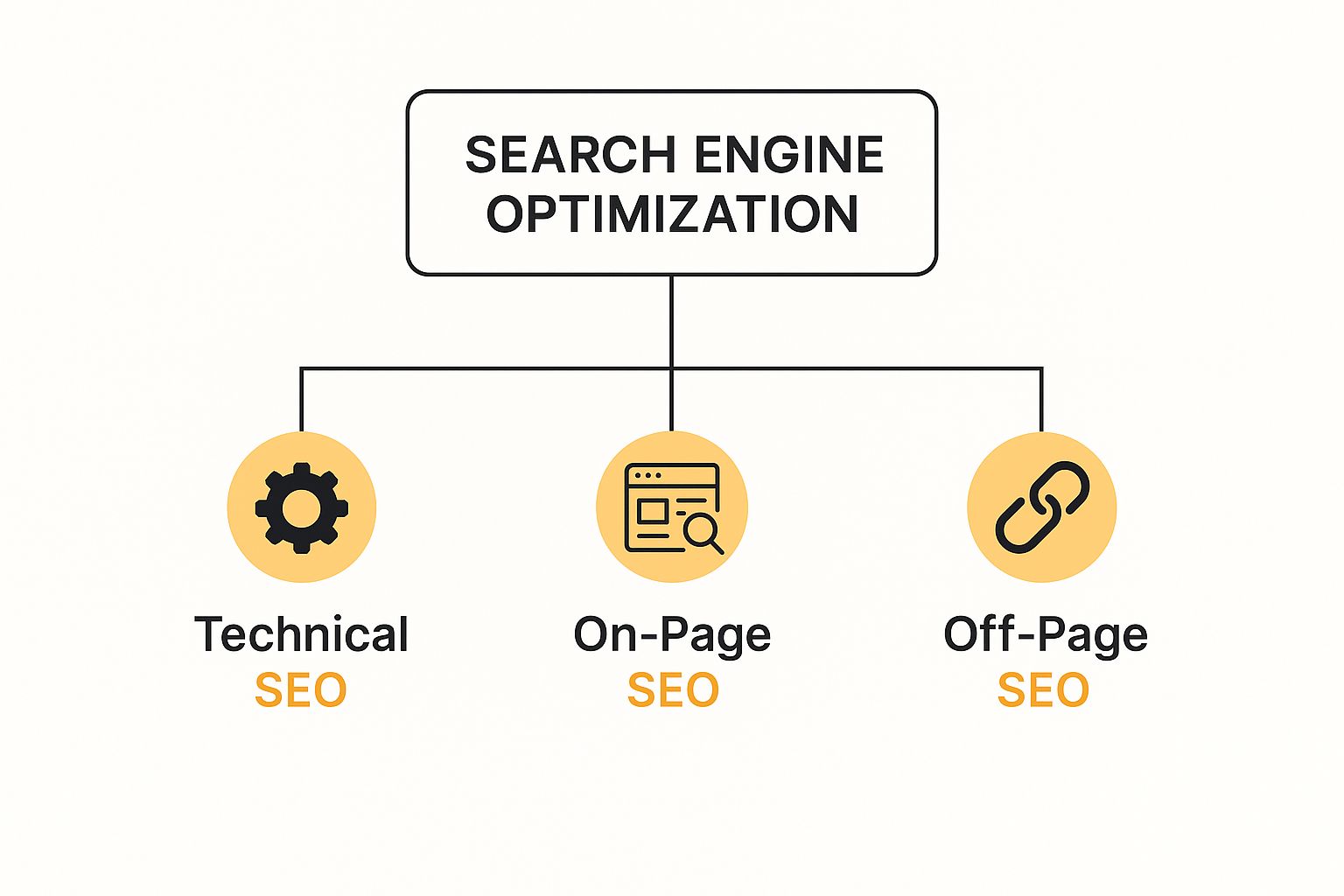
The four commonly recognised pillars of SEO are technical SEO, on-page SEO, content and off-page SEO. Technical SEO helps search engines crawl and index a website; on-page SEO optimises elements such as page titles, headings and internal links; content provides useful, relevant information for visitors; and off-page SEO builds a site’s reputation through signals such as quality backlinks and brand mentions. The exact categories can vary between SEO frameworks, but together these areas support stronger search visibility.
What are the 3 types of SEO optimizations?
The three main types of SEO optimisation are on-page, off-page and technical SEO. On-page SEO improves elements on your website, such as content, headings and page titles; off-page SEO builds your site’s reputation and authority through signals such as relevant links and mentions; and technical SEO focuses on helping search engines crawl, index and understand your website, including its speed, mobile usability and structure. Together, these areas support stronger visibility in search results.
What do you mean by SEO management?
SEO management is the ongoing process of planning, implementing and reviewing activities that improve a website’s visibility in unpaid search results. It can include technical checks, keyword research, content improvements, website optimisation and performance reporting. The aim is to help the right people find useful, relevant pages and support broader business goals, such as generating enquiries or increasing sales.
What is the function of SEO?
The function of search engine optimisation (SEO) is to improve a website’s visibility in unpaid search results, helping the right people find it when they search for relevant products, services or information. SEO involves making a site easier for search engines to crawl and understand, while creating useful content and a positive experience for visitors. Done well, it can attract more relevant traffic and support goals such as enquiries, sales or brand awareness.
What is the role of an SEO manager?
An SEO manager plans and oversees the work needed to improve a website’s visibility in organic search results. This can include researching search opportunities, coordinating technical improvements and content updates, monitoring performance, and using data to recommend next steps. They may also work with developers, writers and marketing teams to ensure SEO supports wider business goals and delivers a useful experience for visitors.
What is SEO and how it works?
SEO, or search engine optimisation, is the process of improving a website so it is more likely to appear prominently in unpaid search results. Search engines such as Google discover pages by crawling the web, organise them in an index, then use algorithms to rank relevant results for each search. SEO helps by making a site easier to crawl and understand, creating useful content that answers people’s questions, and building trust through a good user experience and reputable links. It is an ongoing process, as search behaviour, competitors and search engine systems change over time.
What is SEO and how does it work?
Search engine optimisation (SEO) is the process of improving a website so it is more likely to appear prominently in unpaid search results. It works by helping search engines discover and understand a site’s pages, then assess how relevant and useful they are for a search. This involves creating helpful content, using clear page titles and structure, ensuring the site is technically sound and easy to use, and building trust and authority over time. SEO is an ongoing process, as search algorithms, competitors and people’s needs change.
What are the 4 stages of SEO?
There is no single universally agreed set of four SEO stages, but a common framework is technical SEO, keyword research, on-page optimisation and off-page SEO. Technical SEO helps search engines crawl and index a website; keyword research identifies the terms and topics people search for; on-page optimisation improves relevant pages and content; and off-page SEO builds the site’s authority through credible links and mentions. These areas work together and should be reviewed regularly as search performance and business goals change.
What does a search engine Optimisation Manager do?
A Search Engine Optimisation (SEO) Manager plans and oversees the work needed to improve a website’s visibility in organic search results. This typically includes researching keywords and competitors, managing technical SEO improvements, guiding content optimisation, monitoring website performance and reporting on results. They may also coordinate with developers, writers and marketing teams to ensure SEO is considered across the website and wider campaigns, using data to refine priorities over time.
What is the main purpose of SEO?
The main purpose of search engine optimisation (SEO) is to improve a website’s visibility in unpaid search results, helping the right people find it when they search for relevant products, services or information. Effective SEO also aims to attract useful, qualified visitors and make the website clear, helpful and easy to use, supporting goals such as enquiries, sales or engagement.
What is SEO and how it is work?
SEO, or search engine optimisation, is the process of improving a website so it is more likely to appear prominently in unpaid search results. It works by helping search engines discover, understand and assess your pages through clear, useful content, relevant keywords, sound technical setup and links from reputable websites. When these elements meet searchers’ needs, search engines may show your pages for relevant searches, helping more potential customers find your business. SEO takes time and requires ongoing monitoring and improvement.
What is SEO and how it is used?
Search engine optimisation (SEO) is the process of improving a website so it is more likely to appear prominently in unpaid search results. It is used to help search engines understand a site’s content and make it easier for people to find useful, relevant pages. This can involve improving website structure and speed, creating helpful content, researching the terms people search for and earning links from reputable websites. Over time, effective SEO can attract more relevant visitors and support goals such as enquiries, bookings or sales.
How is SEO managed?
SEO is managed through a continuous process of planning, improving and reviewing a website’s performance in search results. This typically involves researching relevant search terms, checking technical health, creating or updating useful content, improving site structure and monitoring traffic, rankings and conversions. Regular analysis helps identify what is working, address issues and adjust the strategy as search behaviour and business goals change.
Can I do SEO optimization myself?
Yes, you can manage many SEO tasks yourself, particularly if you have a small website and are willing to learn. You can research the terms your audience uses, improve page titles and content, organise your site clearly and monitor performance with tools such as Google Search Console. SEO takes time, and technical issues or highly competitive markets can be more challenging, so you may choose to bring in a specialist for particular tasks or ongoing support.